
Table of Contents
Auger cast piles are one of the most productive deep foundation systems used where high installation rates, low vibration, and moderate to high axial capacity are required. Also called augercast piles, CFA piles, continuous flight auger piles, or auger cast-in-place piles, they are installed by drilling with a hollow-stem continuous flight auger and placing grout or concrete through the auger as it is withdrawn. The method is fast, economical in the right ground, and especially useful on congested urban sites, but it is also highly dependent on equipment control, grout pressure, drilling discipline, and experienced inspection.
What Are Auger Cast Piles?
Auger cast piles are cast-in-place deep foundation elements formed by advancing a continuous flight auger to the required depth, pumping grout or concrete through the hollow stem of the auger, and withdrawing the auger while maintaining a positive head of material in the drilled hole. After the shaft is filled, reinforcing steel is installed into the fluid grout or concrete. The completed pile transfers structural load to the ground through a combination of side resistance and end bearing, although side resistance is often the dominant design component in many applications.
The term “auger cast pile” is commonly used in the United States. “CFA pile” and “continuous flight auger pile” are also widely used, especially in international practice. “Augercast pile” is often used as a single-word variation. In many specifications, these terms refer to closely related systems that share the same central construction concept: a continuous auger drills the pile, and the pile is concreted or grouted as the auger is withdrawn.
The key distinction is that the hole is not left open. Unlike a conventional drilled shaft, where the bore is excavated and may remain open temporarily before concrete placement, an auger cast pile is installed in a continuous process. The auger flights support the soil during drilling, and the grout or concrete replaces the auger volume during withdrawal. This gives the system its productivity advantage, but it also limits the opportunity for visual inspection of the excavation.
The Federal Highway Administration’s Geotechnical Engineering Circular No. 8 describes continuous flight auger piles as a system where a continuous flight hollow-stem auger is drilled to depth and concrete or grout is pumped through the auger stem during withdrawal. That same FHWA document is one of the primary references used in U.S. practice for CFA pile design, construction, equipment, inspection, and quality control.
Where Auger Cast Piles Fit in Deep Foundation Work
Auger cast piles occupy an important middle ground between driven piles and drilled shafts. They can be installed with less vibration than driven piles, at higher production rates than many drilled shafts, and with equipment that can work efficiently on commercial, industrial, transportation, and infrastructure projects.
Contractors often consider auger cast pile foundations where the site needs deep foundation support but impact driving is undesirable. That may include urban infill projects, work near existing structures, vibration-sensitive utilities, hospitals, schools, rail facilities, or older masonry buildings. The system can also be attractive where drilled shafts would be slow, expensive, or difficult because of repeated casing, slurry handling, or hole stability concerns.
The method is not universal. Auger cast piles are not the best fit for every subsurface profile, load demand, or inspection requirement. They are best understood as a production-driven deep foundation system that performs well when the geotechnical conditions, pile geometry, equipment, grout mix, reinforcement details, and quality control program are aligned.
Auger Cast Piles vs Drilled Shafts
Drilled shafts and auger cast piles are both cast-in-place deep foundation systems, but they differ substantially in construction sequence, inspection opportunity, diameter range, reinforcement placement, and risk profile.
A drilled shaft is typically constructed by drilling an open hole, stabilizing the excavation with casing, slurry, or natural ground stability, placing a reinforcing cage, and then placing concrete. The completed shaft may be large in diameter and may be designed for high axial, lateral, and moment demands. Because the excavation is open before concrete placement, the contractor and inspector may have more opportunity to evaluate bottom cleanliness, sidewall condition, groundwater behavior, and obstructions, although visibility can still be limited when slurry or water is present.
An auger cast pile is generally smaller in diameter and is installed without leaving the excavation open. The auger drills to depth, grout or concrete is pumped through the hollow stem, and the auger is withdrawn as the pile is formed. Reinforcement is installed after the pile is filled. This allows rapid installation and avoids open-hole stability problems, but it also means the contractor cannot visually inspect the completed bore before placement. Quality depends on monitoring depth, auger rotation, penetration rate, grout volume, grout pressure, withdrawal rate, and reinforcement installation.
Drilled shafts are often favored where very large diameters, high lateral loads, high moments, rock sockets, full-length cages, or direct observation of the excavation are required. Auger cast piles are often favored where repeated smaller-diameter piles can be installed quickly, where vibration must be minimized, and where subsurface conditions allow reliable augering and placement.
The choice is rarely just a design preference. It is a construction decision as much as an engineering decision. A drilled shaft may look more robust on paper, but if casing, slurry, spoils handling, or groundwater control make production slow and expensive, auger cast piles may provide a better project solution. Conversely, if reinforcement requirements are heavy or the pile must resist major lateral and moment loads, a drilled shaft may be more practical.
Auger Cast Piles vs Driven Piles
Driven piles are installed by impact hammer, vibratory hammer, press-in equipment, or other driving methods. They may be steel H-piles, pipe piles, prestressed concrete piles, timber piles, or other driven elements. Driven piles displace or penetrate the soil and are often verified through driving resistance, dynamic measurements, static load testing, or wave equation analysis.
Auger cast piles are drilled and cast in place. They remove soil through the auger flights rather than being driven into the ground. This produces much lower vibration and generally lower noise than impact-driven systems. That is a major advantage near existing structures, utilities, vibration-sensitive equipment, or occupied buildings.
Driven piles have a major quality advantage in that installation resistance provides continuous feedback. If a pile suddenly loses resistance or refuses early, the contractor knows immediately that subsurface conditions have changed. Auger cast piles do not provide the same simple driving record. Instead, they rely on drilling parameters, grout volume, pressure records, spoil observations, and post-installation testing.
Driven piles can perform very well in soft to medium soils, dense sands, gravels, and some weathered rock conditions, depending on pile type and equipment. They can also be difficult where vibration, noise, heave, lateral movement, or obstructions are major concerns. Auger cast piles can be effective in many cohesive and granular soils, but they are sensitive to caving soils, artesian groundwater, loss of grout pressure, poor spoil removal, and reinforcement installation problems.
Cost comparison depends heavily on the job. Driven piles may be more economical where pile lengths are predictable, vibrations are acceptable, and production is high. Auger cast piles may be more economical where vibration restrictions, access limitations, variable pile lengths, or urban constraints make driven pile installation difficult.
Installation Sequence
Layout and Pre-Construction Planning
The installation sequence begins before the rig starts drilling. Pile locations must be surveyed, working platforms must be evaluated, spoil handling routes must be established, and the grout or concrete supply must be coordinated with production. A weak working platform is not a minor inconvenience. Auger cast rigs can be heavy, and pile quality depends on stable, level equipment operation.
The contractor should review the geotechnical report, pile schedule, design loads, specified diameters, tip elevations, cut-off elevations, reinforcement requirements, testing requirements, and acceptance criteria. Obstructions, existing foundations, utilities, overhead restrictions, contaminated soils, groundwater conditions, and access limitations must be considered before production begins.
Pre-production meetings are especially valuable for auger cast pile work because the system depends on continuous operations. The drilling crew, pump operator, grout plant, concrete supplier, inspector, surveyor, and testing agency all affect the final product.
Drilling to Design Depth
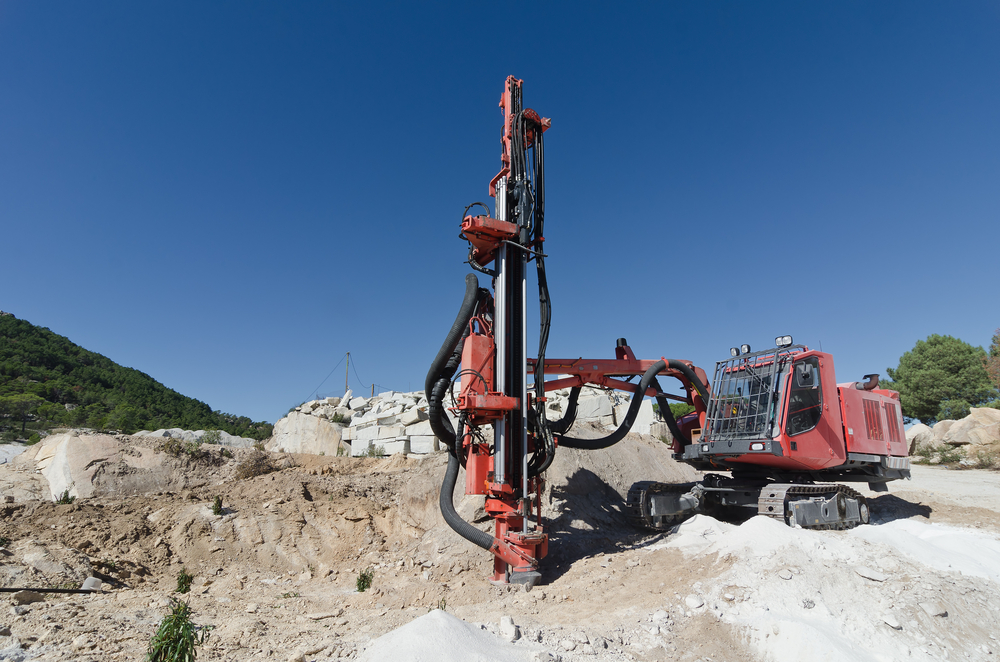
The pile is drilled by rotating the continuous flight auger into the ground to the required depth or bearing elevation. The auger flights carry soil cuttings to the surface as drilling progresses. The operator must balance penetration rate and rotation speed to avoid excessive soil mining, soil decompression, or uncontrolled spoil removal.
Over-advancing the auger too aggressively can loosen the surrounding ground. Drilling too slowly can reduce production and increase disturbance. In granular soils, careless drilling may increase the risk of ground loss. In cohesive soils, spoil sticking to the flights can affect drilling efficiency and pile geometry.
The auger should generally remain filled with soil during advancement. This helps support the surrounding ground. If the auger is repeatedly raised and lowered, or if the hole is opened before placement, the risk of defects increases.
Grout or Concrete Placement During Withdrawal
Once the auger reaches design depth, grout or concrete is pumped through the hollow stem. The plug at the auger tip is expelled, and material begins filling the base of the drilled hole. The auger is then withdrawn while pumping continues.
The most important construction principle is that grout or concrete must maintain a positive head above the auger tip during withdrawal. If the auger is pulled too fast, if pumping is interrupted, or if the pressure drops, soil can intrude into the pile. That can create necking, inclusions, voids, or a weakened section.
The contractor must coordinate withdrawal rate with pump output and pile diameter. The volume placed should exceed the theoretical pile volume by a reasonable margin because auger cast pile installation normally requires overbreak, filling of small irregularities, and compensation for ground conditions. Very low placed volume can indicate necking or soil intrusion. Extremely high volume can indicate ground loss, over-excavation, voids, or uncontrolled grout take.
Spoil Handling and Cut-Off
As the auger is withdrawn, spoil is removed from the flights and managed at the surface. Spoil handling affects safety, access, productivity, and inspection. Poor spoil control can interfere with pile location, reinforcement installation, and adjacent pile work.
After placement, the pile top is brought to the required elevation, often above final cut-off to allow removal of contaminated or weak material. The final cut-off should expose sound grout or concrete. If the pile head contains laitance, soil-contaminated material, or poorly consolidated grout, it must be removed before connection to the pile cap or grade beam.
Grout and Concrete Requirements
Grout Used in Auger Cast Piles
Many auger cast piles are constructed with a sand-cement grout rather than conventional coarse aggregate concrete. The grout must be pumpable through the auger stem and tremie line, stable under pressure, and capable of reaching the specified compressive strength. It must also remain workable long enough for reinforcement installation.
Grout commonly includes cement, fine aggregate, water, and admixtures. The mix must balance pumpability, strength, bleed control, set time, and durability. A mix that is too stiff may be difficult to pump or may prevent reinforcement from reaching the required depth. A mix that is too wet may bleed, segregate, or fail to meet strength requirements.
The grout plant must be capable of continuous supply. Interruptions are more serious in auger cast pile work than in many other concrete operations because placement is tied directly to auger withdrawal. If supply stops while the auger is being withdrawn, the pile can be compromised.
Concrete Used in CFA Piles
Some CFA piles use concrete rather than sand-cement grout. Concrete for CFA work must be designed for pumpability and stability. Aggregate size must be compatible with the pump line, auger stem, pile diameter, and reinforcement spacing. The mix must flow around reinforcement without segregation.
Concrete placement in CFA piles is not the same as open-hole shaft placement. It is pressure placement through the hollow auger during withdrawal. The mix must tolerate the pumping process and remain workable long enough to allow cage or bar installation after placement.
Strength, Workability, and Testing
Specified compressive strength should reflect design requirements and realistic field performance. Strength testing is usually performed on samples taken from the grout or concrete supply. Workability, temperature, batch records, delivery timing, and admixture use should be documented.
For auger cast piles, workability is not only a concrete property. It is also a constructability requirement. If reinforcement cannot be installed to depth because the mix stiffens too quickly, contains unsuitable aggregate, or lacks proper flow, the pile may not meet the design intent even if cylinder breaks are acceptable.
Reinforcement Installation
Typical Reinforcement Details
Reinforcement in auger cast piles may consist of a single center bar, a bundled bar arrangement, a partial-length reinforcing cage, a full-length cage, or a structural steel section. The required reinforcement depends on axial load, uplift, lateral load, seismic demand, pile cap connection, bending requirements, and code provisions.
Many compression piles with low lateral demand use relatively simple reinforcement near the top of the pile to provide connection into the pile cap. Tension piles, seismic piles, and piles subject to lateral load require more substantial reinforcement. The reinforcement must be detailed not only for structural capacity but also for installation.
Installing Reinforcement Into Fresh Grout
Reinforcement is installed after the pile is grouted or concreted. This is one of the defining challenges of auger cast pile construction. The cage, bar, or section must be inserted while the material is still fluid enough to allow penetration and proper embedment.
Light cages may be pushed or vibrated into place. Heavier cages or long reinforcement may require special installation methods. Centralizers, cage stiffness, bar alignment, splice details, and lifting points must be planned carefully. A cage that racks, bends, floats, or refuses before reaching depth can create major acceptance issues.
The practical limit of reinforcement length is a key design consideration. Engineers should not assume that any cage length that can be drawn on paper can be installed in the field. Long cages, tight spirals, large bars, insufficient clear spacing, and low-slump mixes can make reinforcement installation difficult or impossible.
Reinforcement Tolerances and Constructability
Reinforcement must be placed within tolerance for depth, alignment, projection into the cap, and cover. However, auger cast piles are not open excavations where reinforcement can be set before concrete placement. The installer is working against time, grout stiffness, cage weight, and ground friction.
Contractor input during design can prevent many reinforcement problems. If the pile requires heavy cage reinforcement, high lateral capacity, or full-length steel, the design team should evaluate whether a drilled shaft, micropile, or driven pile would be more appropriate.
Quality Control
Why Quality Control Is Critical
Auger cast pile quality is built during installation. Because the completed hole cannot be inspected visually before placement, quality control must focus on process control, documentation, and verification testing.
The most important records include pile number, location, diameter, drilling start and finish time, depth, auger penetration rate, grout or concrete start time, grout or concrete volume, pumping pressure, auger withdrawal rate, reinforcement details, cut-off elevation, weather, delays, and unusual observations.
Modern rigs may use automated monitoring systems that record depth, torque, crowd pressure, rotation speed, pump pressure, pump volume, and withdrawal rate. These systems are valuable, but they do not replace experienced field judgment. The inspector must still understand what the numbers mean.
Production Monitoring
During production, the inspector should compare theoretical pile volume with actual placed volume. Theoretical volume is based on pile diameter and length. Actual volume is measured from pump strokes, flow meters, batch tickets, or automated monitoring systems.
Low volume is a warning sign because it may indicate inadequate pile diameter, voids, soil intrusion, or loss of grout continuity. High volume can also be a warning sign because it may indicate over-excavation, ground loss, soft zones, open voids, or uncontrolled grout flow.
Pressure records are equally important. A sudden pressure drop during withdrawal can indicate loss of head or an open pathway. Excessive pressure can indicate blockage, stiff material, or pumping problems. Pressure must be interpreted in context with depth, soil type, pump rate, and withdrawal speed.
Load Testing and Integrity Testing
Static load testing remains one of the most direct ways to confirm pile performance. Compression, tension, and lateral load tests may be used depending on project requirements. Test piles can also help establish production criteria, confirm capacity assumptions, and refine installation methods.
Integrity testing may include low-strain sonic echo testing, crosshole sonic logging where access tubes are installed, or thermal integrity profiling when applicable. The suitability of each method depends on pile diameter, reinforcement, access, material type, and project specifications.
Caltrans describes continuous flight auger piles as specialty piles and notes that specialty pile systems require project-specific consideration, review, and acceptance rather than casual substitution for standard pile types. That approach is consistent with good practice: CFA piles can be highly effective, but they require proper design, specification, contractor qualification, and inspection.
Common Defects
Necking
Necking occurs when the pile diameter is reduced over a portion of its length. It can result from pulling the auger too fast, insufficient grout volume, loss of grout pressure, caving soil, or groundwater inflow. Necking reduces cross-sectional area and can reduce axial, tension, or bending capacity.
Necking is especially concerning because it may not be visible at the surface. It must be prevented through proper withdrawal control, continuous pumping, and volume monitoring.
Soil Inclusions
Soil inclusions occur when soil becomes trapped within the grout or concrete. This can happen if the grout head is lost, if the auger is stopped and restarted improperly, if spoil falls into the fresh pile, or if unstable soils collapse into the pile during placement.
Small inclusions may not always be structurally significant, but large inclusions can create weak zones or discontinuities. Integrity testing may identify suspected anomalies, but prevention remains the best control.
Voids and Discontinuities
Voids can develop when pumping is interrupted, the auger is withdrawn without enough material, or the grout line becomes blocked. A discontinuity can create a serious structural defect, especially in compression zones, tension zones, or areas of high bending.
The risk is highest when communication between the rig operator and pump operator breaks down. Auger withdrawal must be matched to pump output continuously.
Reinforcement Refusal
Reinforcement refusal occurs when the cage, bar, or steel section cannot be installed to the required depth. Causes include grout setting too quickly, low workability, cage flexibility, excessive cage length, tight spiral spacing, obstructions, misalignment, or pile curvature.
This defect often begins as a design and planning issue. If the reinforcement detail is difficult to install, field crews may not be able to correct it after the pile has already been placed.
Pile Head Defects
Pile head defects include contaminated grout, laitance, low-strength material, poor consolidation near the top, and damage during excavation. These defects are common in many cast-in-place systems and must be addressed before pile cap construction.
The pile head should be cut down to sound material. The final connection into the cap or grade beam must satisfy development, embedment, and tolerance requirements.
Best Soil Conditions
Cohesive Soils
Auger cast piles can perform well in many cohesive soils, including stiff clays and clayey soils that stand long enough for the continuous installation process. The auger flights support the ground during drilling, and pressure placement reduces the open-hole stability risk.
Soft cohesive soils require careful evaluation. They may be suitable, but low shear strength can increase concerns about pile capacity, group effects, settlement, lateral movement, and construction disturbance. In very soft soils, rig stability and working platform design may also govern.
Sands and Silty Sands
CFA piles are often used successfully in sands and silty sands, especially where groundwater or caving conditions would make open-hole drilled shafts difficult. Because the excavation is not left open, the method can reduce some stability problems associated with conventional drilled holes.
However, granular soils require strict control of auger withdrawal and grout pressure. If the auger is pulled too quickly or the grout head is lost, sand can flow into the pile. Loose saturated sands, running sands, and soils susceptible to ground loss require particular caution.
Mixed Soil Profiles
Many project sites contain layered soils. Auger cast piles can often handle mixed profiles of clay, silt, sand, and weathered material, but transitions can create risk. A pile that drills easily through soft material may encounter dense sand, gravel, debris, or rock at depth. The contractor must have equipment capable of reaching design depth without excessive disturbance.
Layered profiles also affect capacity. A pile may derive most of its resistance from a lower dense layer, from side resistance along a stiff clay layer, or from a combination of strata. The design must reflect actual subsurface conditions rather than assuming uniform behavior.
Limitations
Limited Visual Inspection
The most important limitation of auger cast piles is that the excavation cannot be visually inspected before placement. This distinguishes them from many drilled shaft applications where the bottom and sidewalls may be observed or evaluated before concrete placement.
Because of this limitation, auger cast piles demand strong installation records, qualified contractors, trained inspectors, and appropriate verification testing. Projects that require direct bottom inspection, rock socket cleaning verification, or detailed visual confirmation may not be good candidates.
Obstructions and Hard Layers
Auger cast piles are not ideal where boulders, rubble, timber, old foundations, buried concrete, riprap, debris, or very hard rock layers are expected. Obstructions can deflect the auger, stop penetration, damage tooling, or create defective piles.
Pre-drilling, obstruction removal, redesign, or alternate foundation systems may be required. On urban redevelopment sites, obstruction risk should be evaluated early because it can dominate cost and schedule.
Reinforcement Constraints
Heavy reinforcement is a practical limitation. Since reinforcement is installed after placement, cage length, cage stiffness, bar size, spacing, and embedment depth must be constructible. Full-length cages can be difficult, especially in smaller diameter piles or stiff mixes.
Where a pile must resist large bending moments, high seismic demands, or significant lateral loads, the reinforcement requirement may push the design toward drilled shafts, driven piles, or micropiles.
Ground Loss and Adjacent Structures
Although auger cast piles produce low vibration, they can still affect nearby ground if installed improperly. Excessive spoil removal, uncontrolled auger advancement, or over-pumping can cause ground movement. In sensitive urban work, settlement monitoring and adjacent structure protection may be required.
Low vibration should not be confused with no risk. The system is quiet and efficient, but careless drilling can still disturb the ground.
Quality Depends on Contractor Experience
Auger cast pile construction is highly technique-sensitive. A qualified specialty contractor with appropriate equipment and experienced operators is essential. The same design installed by two different crews can produce very different results if one crew lacks control over drilling, pumping, monitoring, or reinforcement placement.
Specifications should address contractor qualifications, equipment requirements, monitoring requirements, grout or concrete mix approval, test pile programs, inspection, and acceptance criteria.
Cost Drivers
Pile Diameter and Depth
Pile diameter and depth directly affect drilling time, grout or concrete volume, reinforcement, spoil handling, and equipment requirements. Larger diameter piles carry more load but require greater pump output and may impose more demanding installation control.
Depth affects productivity and risk. Deeper piles require longer augers, higher pumping coordination, more spoil handling, and more careful monitoring. Very deep CFA piles may be feasible with specialized equipment, but they are not always economical.
Soil Conditions
Soil conditions are one of the largest cost drivers. Easy drilling in consistent soils supports high production. Dense layers, obstructions, cobbles, boulders, hardpan, rock, running sands, or contaminated soils can slow production and increase risk.
Groundwater conditions also matter. CFA piles can be advantageous in groundwater compared with open-hole drilled shafts, but artesian pressure or highly permeable zones can complicate placement.
Reinforcement Requirements
Simple top bars are inexpensive compared with long cages, heavy bars, structural steel sections, or seismic detailing. Reinforcement that is difficult to install can slow production and increase rejection risk.
Designers should consider whether load demand is best handled by fewer heavily reinforced piles or more lightly reinforced piles. The most efficient answer depends on the structure, pile cap geometry, equipment, and ground conditions.
Testing and Inspection
Load testing, integrity testing, automated monitoring, full-time inspection, and pre-production test piles add cost, but they also reduce uncertainty. On critical projects, these measures are not optional extras. They are part of the foundation system.
The cost of quality control should be evaluated against the cost of foundation failure, remediation, schedule delay, or claim exposure.
Access, Headroom, and Site Logistics
Access affects rig selection, production, spoil removal, grout supply, and safety. Tight urban sites may require smaller rigs, staged work, off-hour deliveries, or special spoil management. Low-headroom conditions may limit equipment and pile length.
Grout or concrete supply logistics are also critical. A pile cannot be installed properly without reliable, continuous material delivery.
When to Specify Auger Cast Piles
Auger cast piles should be considered when the project needs a low-vibration deep foundation system, when pile loads are suitable for CFA pile capacities, when soils can be drilled with continuous flight auger equipment, and when the site benefits from fast production. They are often a good fit for building foundations, sound walls, tanks, industrial structures, bridges, retaining structures, and transportation work where vibration or noise restrictions make driven piles less attractive.
They are also worth considering when drilled shafts would require casing or slurry for many small to medium diameter elements. In those conditions, CFA piles may provide faster installation with less open-hole risk.
The system should be specified with caution where the site contains major obstructions, very hard bearing layers, large boulders, highly variable rock, high lateral loads, heavy reinforcement, strict visual inspection requirements, or unusual groundwater pressures. In those cases, another deep foundation system may provide better reliability.
A good specification should not simply state “install auger cast piles.” It should define pile type, diameter, design load, minimum tip elevation or required capacity criteria, grout or concrete requirements, reinforcement details, installation tolerances, monitoring requirements, inspection procedures, testing requirements, and acceptance criteria. It should also require a qualified contractor with demonstrated experience on similar work.
Design Considerations
Axial Compression
Most auger cast piles are designed primarily for axial compression. Capacity is developed through side resistance along the pile shaft and end bearing at the pile tip. The relative contribution of each depends on soil type, pile length, pile diameter, installation method, and design assumptions.
Because CFA piles are cast in place under pressure, their side resistance can be favorable in some soils. However, design values must be based on accepted geotechnical methods, local experience, and load testing where required. It is not appropriate to assume driven pile behavior or drilled shaft behavior without considering installation effects.
Uplift and Tension
Auger cast piles can resist uplift through side resistance and reinforcement. Tension design requires careful attention to reinforcement embedment, pile cap connection, grout-to-steel bond, and structural capacity. The reinforcement must extend deep enough to transfer the required tensile force.
Uplift piles often require more reinforcement than compression-only piles. That makes constructability more important. A design that requires long cage installation into fresh grout must be reviewed with installation practicality in mind.
Lateral Load and Moment
CFA piles can resist lateral loads, but they are often less efficient than larger drilled shafts where high bending moments are present. Lateral capacity depends on pile diameter, stiffness, reinforcement, soil modulus, fixity, group effects, and pile head condition.
When lateral loads are modest, auger cast piles may be suitable. When lateral demands are high, the required reinforcement and diameter may make drilled shafts or driven piles more practical.
Group Effects and Settlement
Pile groups must be evaluated for group efficiency, settlement, pile spacing, cap stiffness, and interaction with surrounding soils. In cohesive soils, group settlement may control even when individual pile capacity appears adequate. In granular soils, installation effects and densification or loosening should be considered.
Settlement analysis should include both immediate and long-term components where applicable. For structures sensitive to differential movement, serviceability may control the design more than ultimate capacity.
Applications
Commercial and Institutional Buildings
Auger cast pile foundations are common for offices, schools, hospitals, multifamily buildings, and mixed-use developments. These projects often involve urban access constraints, vibration limits, adjacent structures, and schedules that reward fast installation.
Industrial Facilities
Industrial projects may use auger cast piles for equipment foundations, pipe racks, tanks, process structures, and mat-supported systems. The low-vibration installation is useful near operating facilities, although quality control and tolerance requirements can be demanding.
Transportation and Infrastructure
CFA piles may be considered for bridges, sound walls, retaining walls, light poles, signs, and transit structures where specifications allow their use. Transportation agencies often require additional review, test piles, load testing, and monitoring because foundation reliability is critical.
Retaining Systems and Excavation Support
Auger cast piles can be used in secant pile walls, tangent pile walls, and soldier pile applications in appropriate ground. For wall applications, verticality, overlap, pile continuity, and reinforcement placement become especially important.
Practical Specification Guidance
A good auger cast pile specification should be written around the risks of the method. It should require the contractor to submit equipment details, installation procedures, grout or concrete mix designs, reinforcement installation methods, monitoring systems, load test procedures, and quality control plans before production begins.
The specification should define refusal or termination criteria if piles are designed to reach a bearing stratum. It should also address what happens if design depth cannot be reached, if grout volume is outside acceptable limits, if reinforcement cannot be installed, or if integrity testing indicates an anomaly.
The owner and engineer should avoid using auger cast piles as a casual substitution after bid unless the design, load testing, and inspection requirements are reviewed. A pile system is not interchangeable simply because the nominal design capacity appears similar.
Summary Table
|
Topic |
Practical Consideration |
|---|---|
|
Primary Advantage |
Fast installation with low vibration and reduced open-hole stability risk |
|
Common Names |
Auger cast piles, augercast piles, CFA piles, continuous flight auger piles |
|
Typical Use |
Building foundations, industrial structures, transportation elements, retaining systems |
|
Main Construction Risk |
Loss of grout head or poor coordination between auger withdrawal and pumping |
|
Main Design Constraint |
Reinforcement installation after grout or concrete placement |
|
Best Conditions |
Cohesive soils, sands, silty sands, and mixed profiles suitable for continuous auger drilling |
|
Challenging Conditions |
Obstructions, boulders, rubble, hard rock, running sands, artesian groundwater |
|
Quality Control Focus |
Depth, volume, pressure, withdrawal rate, grout properties, reinforcement depth, testing |
|
Compared With Drilled Shafts |
Faster and less open-hole exposure, but less visual inspection and less suited to heavy cages |
|
Compared With Driven Piles |
Lower vibration and noise, but less direct installation feedback than driving resistance |
Auger cast piles are a proven deep foundation system when the project conditions match the method. Their strengths are speed, low vibration, reduced open-hole exposure, and strong suitability for many commercial, industrial, and infrastructure projects. Their weaknesses are limited visual inspection, sensitivity to installation technique, reinforcement constraints, and vulnerability to defects if grout pressure, volume, or withdrawal rate are not controlled.
For contractors, the message is straightforward. Auger cast pile work rewards planning, equipment control, grout discipline, and experienced crews. For engineers, the system should be designed with constructability in mind, not just geotechnical capacity. For owners, the lowest pile price is not the whole story. The right auger cast pile foundation is one where design, soil conditions, contractor capability, testing, and inspection all line up before production begins.