
Table of Contents
Drilled shafts, caissons, drilled piers, bored piles, CIDH piles, and drilled shaft foundations all describe a family of cast-in-place deep foundation elements constructed by excavating a cylindrical hole, placing reinforcement, and filling the excavation with concrete. The terminology varies by region, owner, and project type, but the field problems are consistent. A drilled shaft is only as good as the ground investigation, the means and methods used to keep the excavation stable, the cleanliness of the bearing surface, the continuity of the concrete, and the inspection program that verifies the work before the load is transferred into the foundation. This guide is written as a practical hub for contractors, inspectors, engineers, and project teams that need to understand how drilled shafts are designed, built, inspected, tested, and controlled in the field.
What Drilled Shafts and Caissons Are
Drilled shafts are cast-in-place deep foundation elements that transfer structural loads through side resistance, end bearing, or a combination of both. They are installed by drilling or excavating a shaft to the required diameter and depth, cleaning the excavation, placing a reinforcing cage when required, and then placing concrete by free fall, pump line, tremie, or other approved method depending on site conditions.
The term caisson is still used in many parts of the construction industry, especially in building foundation work, but it can be imprecise. Historically, caissons included large watertight foundation chambers used for bridge and marine construction. In modern foundation contracting, many people use caisson to mean a drilled pier or drilled shaft. Because specifications, inspection forms, and DOT manuals often use more precise language, contractors should always confirm what the contract documents mean when they reference caissons.
Drilled piers are commonly associated with building foundations, light commercial structures, transmission structures, signs, sound walls, and retaining wall support. Bored piles is the common international term for the same general foundation type. CIDH piles, or cast-in-drilled-hole piles, are a common term in California transportation work. Although these names overlap, the project requirements can vary significantly by owner, design code, test method, and local practice.
The Federal Highway Administration describes drilled shafts as a major deep foundation system for transportation structures and provides detailed guidance on design methods, construction procedures, slurry use, concrete placement, inspection, and load testing in its drilled shaft manual. ACI also recognizes that drilled piers may be called drilled shafts, drilled caissons, drilled piers with bells, drilled shafts with bells, or bored piles, and its drilled pier specification addresses excavation, casing, liners, slurry, reinforcement, concrete placement, testing, and quality control.
Why Drilled Shaft Foundations Are Used
Drilled shaft foundations are used when shallow foundations cannot provide adequate bearing, settlement control, uplift resistance, lateral resistance, scour protection, or constructability. They are common below bridges, high-rise buildings, industrial structures, transmission towers, noise walls, earth retention systems, tanks, marine structures, and heavily loaded equipment foundations.
One of the main advantages of drilled shafts is their high axial and lateral capacity in a single element. A large-diameter shaft can resist substantial compression, uplift, overturning, and lateral loads without requiring the same number of individual elements that might be needed with driven piles or micropiles. This can simplify pile caps, reduce congestion, and provide direct load transfer into competent bearing strata.
Drilled shafts are also useful where vibrations from driven piles are unacceptable. Urban projects, hospital expansions, adjacent historic structures, operating facilities, and sites with vibration-sensitive utilities may favor drilled shafts because the installation process is generally quieter and less vibration-intensive than pile driving. That does not mean drilled shafts are low-risk. They introduce different risks related to excavation stability, groundwater, slurry control, concrete placement, bottom cleanliness, and integrity testing.
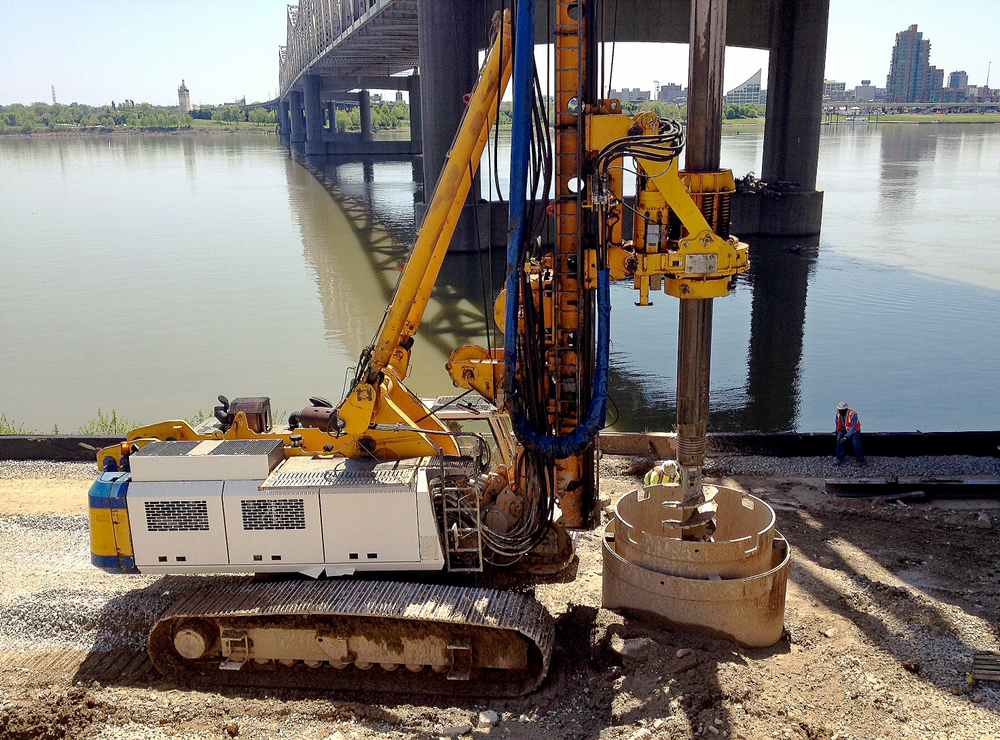
Another benefit is adaptability. Drilled shafts can be installed in a wide range of diameters and depths, and the drilling tools can be changed as soil and rock conditions change. Contractors may use augers, drilling buckets, cleanout buckets, core barrels, rock augers, belling tools, casing oscillators, casing rotators, reverse circulation equipment, or grab systems depending on the ground conditions and required production.
Drilled Shafts, Caissons, Drilled Piers, Bored Piles, and CIDH Piles
The naming differences matter because they affect expectations. A building contractor may refer to a 36-inch drilled pier in dry clay as a caisson. A highway agency may call a similar element a drilled shaft. A California bridge plan may call it a CIDH pile. An international specification may call it a bored pile. The construction method may be similar, but the inspection, testing, concrete requirements, and documentation can be very different.
A drilled pier in a dry, stable excavation may be visually inspected from the surface, cleaned with a cleanout bucket, reinforced with a cage, and concreted by free fall where allowed by the specification. A large transportation drilled shaft under slurry may require slurry testing, bottom sounding, steel cage access tubes, tremie placement, concrete volume tracking, integrity testing, and detailed shaft installation records. The difference is not just vocabulary. It is a different risk profile.
For that reason, contractors should not price or plan drilled shaft work based only on diameter and depth. They should study the specification language, geotechnical report, groundwater conditions, obstruction risk, casing requirements, slurry requirements, reinforcement details, concrete performance requirements, access restrictions, spoil handling, testing program, and acceptance criteria.
|
Term |
Common Use |
Practical Meaning in the Field |
|---|---|---|
|
Drilled Shafts |
DOT, bridge, heavy civil, structural foundation work |
Cast-in-place deep foundation elements designed for axial, lateral, and uplift loads |
|
Caissons |
Building construction and older specifications |
Often used to mean drilled piers or drilled shafts, but should be clarified in the contract |
|
Drilled Piers |
Building foundations, columns, light commercial structures |
Cast-in-place drilled elements, often smaller or less complex than major bridge shafts |
|
Bored Piles |
International and some U.S. specifications |
Same general family as drilled shafts, usually installed by rotary boring methods |
|
CIDH Piles |
California transportation work |
Cast-in-drilled-hole piles with agency-specific inspection and testing requirements |
Where Drilled Shafts Fit in Deep Foundation Design
Drilled shaft design begins with the structure loads and the subsurface profile. The designer evaluates axial compression, uplift, lateral loads, bending, settlement, group effects, constructability, and durability. The foundation must be designed not only to carry the load in theory, but also to be buildable with available equipment and reliable inspection methods.
Compression resistance may come from end bearing at the base, side resistance along the shaft wall, or both. In some soils and rock, side resistance can provide much of the capacity. In other conditions, the design may depend heavily on a clean bearing surface at the bottom of the shaft. That distinction matters because a shaft designed for end bearing is more sensitive to base cleanliness, sediment, loose cuttings, and disturbance at the bottom.
Uplift resistance is usually developed through side resistance, shaft weight, and sometimes an enlarged base or rock socket, depending on the design. Lateral resistance depends on shaft diameter, stiffness, reinforcement, soil response, fixity, and group interaction. Large-diameter drilled shafts can be especially effective for lateral loads because the diameter increases flexural stiffness and soil resistance.
Settlement is another controlling factor. A shaft may have adequate geotechnical resistance but still fail to satisfy settlement limits. For bridges, buildings, and industrial structures, differential settlement may be more important than total settlement. Designers must consider service loads, load transfer behavior, construction tolerances, and the consequences of variability across a site.
Constructability should be considered during design, not after award. A shaft that looks efficient on paper can become expensive or risky if it requires drilling through boulders, maintaining open holes in caving soils, socketing into sloping rock, placing concrete through congested reinforcement, or cleaning a base under polymer slurry with limited access. Good drilled shaft design accounts for how the contractor will actually build the foundation.
Subsurface Investigation and Foundation Planning
A drilled shaft foundation depends on the geotechnical investigation more than many project teams realize. The boring logs, rock cores, groundwater observations, laboratory testing, and site history define the expected construction conditions. Missing or incomplete information can lead to unstable excavations, tool changes, unplanned casing, production delays, excessive concrete overbreak, bottom cleaning problems, and disputes over changed conditions.
A suitable investigation should identify soil stratigraphy, rock type and quality, groundwater conditions, artesian pressure, boulders, cobbles, fill, contamination, karst features, old foundations, utilities, and potential obstructions. For rock sockets, core recovery, rock quality designation, unconfined compressive strength, weathering, jointing, bedding, and discontinuities are important. For wet-method shafts, the investigation should help determine whether slurry or casing will be needed and whether the ground is likely to remain stable during excavation and concrete placement.
Groundwater is often the dividing line between straightforward drilled pier work and more complex drilled shaft work. A dry, stable hole allows direct observation and simpler concrete placement. A wet or unstable hole requires casing, slurry, or another stabilization method. If groundwater is under pressure, the contractor may need to maintain head, use temporary casing, change drilling methods, or manage inflow to prevent base disturbance and sidewall instability.
The contractor’s preconstruction review should compare the geotechnical report to the proposed means and methods. That includes drilling equipment selection, casing availability, slurry plant requirements, spoils handling, crane access, reinforcing cage lifting, concrete delivery rate, tremie size, testing access tubes, inspection hold points, and contingency plans. The time to solve these problems is before the rig arrives, not while a reinforced hole is waiting for concrete.
Common Drilled Shaft Construction Methods
Dry Method Construction
The dry method is used where the excavation can remain stable without casing or slurry and where groundwater inflow is either absent or controlled within specification limits. The shaft is drilled to depth, the bottom is cleaned, the excavation is inspected, reinforcement is placed, and concrete is placed in the dry.
Dry construction is often preferred because the excavation can be visually inspected more easily. The inspector can verify diameter, depth, sidewall condition, bottom cleanliness, groundwater inflow, and bearing material with fewer indirect methods. Concrete placement is also simpler because it does not need to displace slurry or water.
Dry does not mean risk-free. A hole that appears stable near the surface may slough at depth. Loose material can fall from the sidewalls after cleaning. Groundwater can enter after inspection. The base can soften if exposed too long. Adjacent drilling can disturb an open excavation. Contractors should limit open-hole time and coordinate inspection, cage placement, and concrete delivery so the shaft is completed promptly after excavation.
Cased Method Construction
Temporary casing is used to support unstable ground, control groundwater, guide the drilling tool, protect the upper excavation, and maintain shaft diameter. Casing may be installed with vibratory hammers, oscillators, rotators, drilling tools, or other equipment. The casing can extend through unstable soils and terminate in a stable layer, or it may be advanced to full depth depending on conditions.
The critical risk with temporary casing is concrete continuity during casing withdrawal. Concrete must maintain sufficient head inside the casing so that groundwater, slurry, or soil is not pulled into the shaft as the casing is extracted. The contractor must control the rate of casing removal, concrete volume, concrete workability, and embedment of tremie or pump line where applicable.
Permanent casing may be used where the casing is part of the final design, where ground conditions require it, where corrosion protection is needed, or where temporary casing removal could damage the shaft. Permanent casing changes the load transfer assumptions because side resistance may be reduced or eliminated over the cased length unless the design accounts for bond or other mechanisms.
Wet Method and Slurry Construction
The wet method is used where the excavation cannot remain open in dry conditions. Drilling fluid, usually mineral slurry or polymer slurry, is used to stabilize the excavation by applying hydrostatic pressure to the sidewalls and suspending cuttings until they can be removed. The shaft is excavated under fluid, cleaned, tested for slurry properties where required, reinforced, and concreted by tremie or pump so that concrete displaces the fluid upward.
Slurry construction is highly dependent on control. The fluid must be mixed, hydrated, circulated, cleaned, tested, and maintained within specification limits. Sand content, density, viscosity, pH, and other properties may be checked depending on the slurry type and project requirements. Poor slurry control can lead to sidewall instability, excessive filter cake, trapped sediment, contaminated concrete, and weak zones.
The concrete used in wet shafts must be workable, cohesive, and capable of flowing through reinforcement while resisting segregation and washout. Tremie placement must begin with a sealed or plugged pipe, and the discharge end must remain embedded in fresh concrete during placement. If the tremie loses embedment, slurry or water can enter the concrete stream and create a defect.
Rock Socket Construction
Rock sockets are used when drilled shafts must transfer load into competent rock. The shaft is drilled through overburden and advanced into rock to a specified socket diameter and length. Depending on the rock, the contractor may use rock augers, core barrels, down-the-hole hammers, reverse circulation tools, or specialized cutting tools.
Rock socket construction requires attention to socket geometry, roughness, cleanliness, and the condition of the rock. Sloping rock, seams, weathered zones, cavities, and variable hardness can complicate drilling and inspection. A socket that contains cuttings, sediment, or softened material at the base may not perform as intended, especially when end bearing is part of the design.
Where the design relies on side resistance in rock, the sidewall condition matters. Excessive smear, loose rock fragments, or drilling disturbance can reduce bond. Where the design relies on base resistance, bottom cleanliness becomes a major acceptance item. Rock sockets often require more careful tool selection and cleaning than simple soil shafts.
Belled Shafts and Enlarged Bases
Belled shafts use an enlarged base to increase bearing area. They are most common in stable cohesive soils where the bell can be excavated and inspected. Bell construction is less common in many modern heavy civil applications because it requires stable ground, reliable inspection, and safe excavation conditions.
The main advantage of a bell is increased end-bearing area without increasing the shaft diameter over the full depth. The main risk is constructability. The bell must be formed correctly, cleaned properly, and filled completely with concrete. In unstable or wet ground, bells may be impractical or prohibited by the specification.
Drilling Equipment, Tools, and Production Variables
Drilled shaft production depends on matching equipment to ground conditions. A rotary drilling rig with adequate torque, crowd force, mast capacity, tooling, and casing capability is essential. Undersized equipment may still drill the first few feet, but it can fail when the shaft reaches dense sand, hard clay, gravel, cobbles, weathered rock, or competent rock.
Common tools include earth augers, rock augers, drilling buckets, cleanout buckets, core barrels, belling buckets, casing teeth, casing shoes, and specialized grabs. Earth augers are productive in cohesive soils but can be inefficient in granular soils or wet conditions. Drilling buckets are useful for removing loose material and maintaining excavation control. Core barrels help advance through rock, concrete, boulders, and obstructions. Cleanout buckets are used to remove loose cuttings and sediment from the base.
Production is affected by more than drilling speed. Setup time, spoil handling, slurry management, casing installation, cage delivery, crane availability, concrete delivery, inspection hold points, testing tube installation, and weather can control the schedule. A rig that can drill quickly but waits for concrete, inspection, or cage repairs will not produce efficient shaft cycles.
Access and working platform conditions also matter. Drilled shaft rigs are heavy and can impose significant track pressures. The working pad must support the rig, crane, concrete trucks, slurry tanks, casing, spoil piles, and support equipment. Poor access can create safety hazards, reduce verticality control, and increase the risk of dropped cages, damaged casing, or failed excavations.
Reinforcing Cage Design and Installation
The reinforcing cage must be designed and fabricated so it can be lifted, handled, placed, and supported without distortion. Cage stiffness is a practical construction issue as much as a structural issue. Long cages may require temporary bracing, lifting frames, multiple pick points, internal stiffeners, or splicing procedures to maintain shape.
Cage congestion is a common source of drilled shaft problems. Closely spaced vertical bars, heavy ties, bundled bars, crosshole sonic logging tubes, inspection pipes, centralizers, and embedded items can restrict concrete flow. If the concrete cannot pass through the cage and fill the annulus, defects can form. Designers and contractors should review clear spacing, cage diameter, cover, lap locations, couplers, and concrete placement method before construction.
Centralizers or spacers are used to maintain concrete cover and keep the cage centered. They must be strong enough to survive handling and placement, and they must not block concrete flow. Access tubes for testing should be securely attached, watertight, straight, and protected from damage during lifting and placement.
Cage buoyancy can occur during concrete placement, especially when concrete is placed rapidly or when casing withdrawal creates upward forces. The contractor may need hold-down systems, cage supports, controlled placement rates, or other measures to prevent uplift. Cage movement during concrete placement can compromise cover, embedment, and test tube alignment.
Concrete for Drilled Shafts
Concrete for drilled shafts is not ordinary slab concrete. It must remain workable long enough for delivery, placement, casing withdrawal, tremie operations, and completion of the shaft. It must flow around reinforcing steel, displace water or slurry when required, resist segregation, and maintain continuity in a deep excavation.
For dry shafts, concrete may be placed by free fall where specifications allow and where the concrete will not strike reinforcement in a way that causes segregation. For wet shafts, concrete is typically placed by tremie or pump line. In either case, the mix must be designed for the placement method, shaft geometry, reinforcement congestion, expected placement duration, and ambient conditions.
Workability retention is critical. A mix that arrives within slump or spread limits but stiffens before the shaft is complete can cause voids, trapped slurry, casing extraction problems, or cold joints. Admixtures are commonly used to improve workability, control set time, and maintain flow. The mix should be tested and approved before production shafts begin.
Concrete delivery rate is also a quality control issue. The contractor must place concrete continuously and fast enough to keep the operation moving, but not so fast that the cage floats or the casing withdrawal becomes uncontrolled. Concrete volume should be tracked against theoretical volume to identify overbreak, necking, loss of concrete, or unusual ground conditions.
Tremie and Pump Placement
Tremie placement is used to place concrete below water or slurry without washing cement paste from the aggregate. The tremie pipe must be watertight, clean, properly sized, and long enough to reach the bottom of the excavation. Placement begins with a plug, pig, or other approved method to separate the concrete from the fluid in the pipe. Once the initial charge is placed, the tremie discharge must remain embedded in fresh concrete.
The most serious tremie error is losing embedment. If the tremie is lifted out of the concrete, slurry or water can enter the pipe or mix with the concrete surface. Restarting without proper procedures can create inclusions, seams, or zones of contaminated concrete. The tremie should be raised only as concrete level rises, and the crew should measure concrete level frequently enough to confirm embedment.
Pump placement can be effective when the line is properly controlled and embedded. Like tremie placement, pump discharge must start at the bottom and remain embedded in fresh concrete when placing under fluid. The pump line must not be allowed to discharge from above the concrete surface in a wet shaft.
For both tremie and pump placement, the first concrete rising to the top is often contaminated with slurry, water, laitance, or debris. The shaft should be overpoured as required so that unsound material is removed from the final cutoff elevation. Cutoff treatment is part of the foundation work, not a cleanup detail.
Excavation Stability and Groundwater Control
Excavation stability is one of the central risks in drilled shaft construction. Unstable ground can slough into the hole, enlarge the shaft, trap soil inclusions, increase concrete volume, damage reinforcement, or cause collapse. Stability depends on soil type, groundwater, drilling method, hole diameter, open-hole time, nearby loads, vibration, slurry head, casing, and construction sequence.
Granular soils below groundwater are often unstable without casing or slurry. Soft clays can squeeze or deform. Fill may contain debris, voids, boulders, or uncontrolled material. Rock may appear stable but contain seams, fractures, or weathered zones. Mixed-face conditions can be especially difficult because tools and stabilization methods that work in one layer may not work in the next.
Groundwater inflow can loosen base material, carry soil into the excavation, reduce sidewall stability, and prevent dry inspection. Dewatering may be possible in some ground conditions, but it can also increase seepage gradients and destabilize the excavation. In many cases, maintaining a fluid head with slurry or advancing casing is more reliable than trying to pump the hole dry.
The contractor should monitor open excavations continuously. Changes in water level, slurry loss, sudden increases in spoil volume, unexpected concrete take, or difficulty maintaining tool alignment can indicate instability. When conditions change, the construction method may need to change.
Bottom Cleaning and Shaft Acceptance Before Concrete
Bottom cleaning is critical when end bearing contributes to capacity. Loose cuttings, sediment, softened clay, sand, gravel, and settled slurry solids can reduce base resistance and increase settlement. Even when the design relies mainly on side resistance, excessive debris at the bottom can contaminate concrete and create defects.
Cleaning methods include cleanout buckets, air lifts, pumps, sediment removal tools, reverse circulation, and other project-approved methods. The right method depends on whether the shaft is dry or wet, the diameter, depth, soil type, slurry type, and amount of debris. Cleaning should occur as close as practical to concrete placement to reduce the chance of new sediment accumulating.
Inspection may include measuring depth, sounding the base, checking sediment thickness, sampling bottom material, verifying bearing stratum, checking slurry properties near the bottom, and documenting the time between final cleaning and concrete placement. In dry shafts, visual inspection may be possible from the surface or by approved downhole methods. In wet shafts, indirect methods become more important.
The contractor, inspector, and engineer should understand acceptance criteria before production begins. Disputes often arise when the specification is unclear about allowable sediment, cleaning method, slurry properties, or what constitutes refusal, rock, or acceptable bearing material.
Drilled Shaft Inspection
Inspection is not paperwork after the fact. It is active quality control during every stage of the shaft. A drilled shaft inspector must understand the plans, specifications, geotechnical report, drilling equipment, construction sequence, safety requirements, concrete placement method, and acceptance criteria.
Inspection begins before drilling. The inspector verifies shaft location, diameter, equipment, casing, reinforcement, access tubes, concrete mix approval, slurry materials, and preconstruction submittals. During drilling, the inspector records depth, materials encountered, groundwater, casing advancement, slurry level, drilling tools, obstructions, changes in method, and any deviations from expected conditions.
Before concrete placement, the inspector verifies final depth, shaft cleanliness, cage condition, cage length, cage position, cover devices, testing tubes, slurry properties if applicable, and readiness for concrete. During placement, the inspector records start time, finish time, concrete batch tickets, slump or spread, air content where required, temperature, volume placed, tremie or pump embedment, casing withdrawal, concrete level, and any interruptions.
A good drilled shaft inspection record allows the project team to reconstruct what happened. It should show whether the shaft was built in accordance with the design assumptions and specifications. If a defect is suspected later, the inspection record is often the first place the engineer looks.
Load Testing and Verification
Load testing is used to verify design assumptions, optimize foundation design, confirm capacity, or resolve uncertainty. The most common types include static axial compression tests, static uplift tests, lateral load tests, bi-directional load tests, and high-strain dynamic tests where applicable. The selected method depends on the project, shaft size, load level, site access, schedule, and owner requirements.
Static load testing directly measures load-displacement behavior. It can provide valuable information about capacity, stiffness, settlement, and load transfer. However, it requires reaction systems, time, instrumentation, and careful planning. Large drilled shafts can require very large reaction loads, which may make conventional top-down testing expensive or difficult.
Bi-directional testing uses an embedded hydraulic jack assembly to load the shaft upward and downward from within the foundation element. This can be useful for very large shafts because it reduces the need for an external reaction frame. The test must be planned before construction because the device is cast into the shaft.
Instrumentation such as strain gauges, telltales, displacement transducers, and load cells can improve understanding of how load is transferred along the shaft and to the base. This is especially useful where the design depends on side resistance in different strata or where rock socket performance is important.
Integrity Testing
Integrity testing evaluates whether the completed shaft contains anomalies that could affect performance. Common methods include crosshole sonic logging, gamma-gamma logging, thermal integrity profiling, low-strain integrity testing, coring, and excavation or exposure at the top where practical. No single method finds every possible defect, so the test program should match the risk.
Crosshole sonic logging uses access tubes installed in the reinforcing cage. Ultrasonic signals are sent between probes in adjacent tubes, and changes in arrival time or signal strength can indicate anomalies between the tubes. It is widely used for drilled shafts and bored piles, especially when shafts are large, wet-placed, or structurally critical.
Gamma-gamma logging is used on some projects, especially in CIDH pile work, to evaluate concrete density around access tubes. California Test Method 233 addresses gamma-gamma testing for cast-in-drilled-hole piles, and Caltrans documents reference its use for certain CIDH piles, including piles placed under slurry or with temporary casing.
Thermal integrity profiling uses heat generated by cement hydration to identify potential defects, cage alignment issues, necking, bulging, or concrete cover variations. It can provide information over the shaft length and around the circumference depending on the system used. Low-strain integrity testing is faster and less intrusive, but it has limitations for large-diameter shafts, long shafts, and complex defects.
When an anomaly is found, it is not automatically a failed shaft. The engineer must evaluate the location, size, severity, structural demand, redundancy, load path, concrete strength, and whether additional investigation is needed. Follow-up may include coring, excavation, additional testing, structural analysis, repair, load testing, or replacement.
Common Defects and Failure Mechanisms
Drilled shaft defects usually come from breakdowns in excavation stability, cleaning, reinforcement placement, concrete placement, or casing withdrawal. Common problems include soil inclusions, necking, bulging, voids, honeycombing, contaminated concrete, soft bottoms, cage misalignment, insufficient cover, cold joints, and defects at the cutoff elevation.
Soil inclusions occur when sidewall material sloughs into the shaft or when casing withdrawal pulls soil into fresh concrete. Necking can occur when unstable soil squeezes inward or when casing is withdrawn without maintaining adequate concrete head. Bulging can occur where weak soils allow overbreak or where the excavation enlarges beyond the design diameter.
Contaminated concrete is a major risk in wet shafts. If tremie procedures are poor, slurry or water can mix with concrete. If the first concrete charge is not properly isolated from the fluid, the bottom of the shaft can be compromised. If tremie embedment is lost, a seam or inclusion may form. If concrete loses workability before placement is complete, flow around the cage can be incomplete.
Soft bottoms are especially serious for end-bearing shafts. Sediment, cuttings, or disturbed bearing material can reduce capacity and increase settlement. Because the completed shaft hides the base forever, bottom cleaning and inspection before concrete are essential.
Safety in Drilled Shaft Construction
Drilled shaft work involves heavy equipment, open excavations, suspended loads, wet concrete, casing, pressurized lines, rotating tools, unstable ground, and potential confined space hazards. Safety planning must be part of the work plan, not a separate document that sits in the trailer.
Open holes are one of the most obvious hazards. They must be protected with casing, covers, barricades, fall protection, lighting, and access control as required. Workers should not enter drilled shaft excavations unless confined space, excavation, atmospheric, rescue, and project-specific safety requirements are fully addressed. Many drilled shaft excavations are too deep and hazardous for entry.
Lifting reinforcing cages is another major hazard. Cages can be long, flexible, and heavy. Rigging must be engineered or selected for the lift, pick points must be appropriate, and workers must stay clear of suspended loads. Cage collapse or uncontrolled rotation can cause serious injury and damage the shaft.
Concrete placement introduces additional hazards. Tremie pipes, pump lines, pressurized fittings, and moving trucks must be controlled. Casing extraction can create pinch points and suspended load hazards. Slurry systems involve tanks, hoses, pumps, slippery surfaces, and disposal issues. A stable working platform is essential for rigs, cranes, trucks, and personnel.
Quality Control and Documentation
Quality control for drilled shafts depends on planning, monitoring, and complete records. A drilled shaft installation plan should describe equipment, tooling, casing, slurry, spoil handling, reinforcement, concrete placement, inspection coordination, testing, safety controls, and contingency procedures. The plan should be reviewed before work begins and updated when field conditions require changes.
Submittals typically include concrete mix designs, reinforcing cage details, welding or splicing procedures, slurry materials and test methods, casing details, testing tube layout, load test procedures, integrity testing procedures, and shaft installation forms. The contractor should not treat these as administrative exercises. They define how the work will be accepted.
Daily reports should document drilling start and finish times, shaft depth, diameter, tools used, ground conditions, groundwater, slurry properties, casing depth, cleaning procedures, inspection results, cage placement, concrete test results, concrete volume, tremie embedment, casing withdrawal, cutoff elevation, and unusual events. Good records protect both the owner and the contractor.
Concrete volume tracking is one of the simplest and most useful quality checks. The actual concrete volume should be compared to theoretical volume. Higher volume may indicate overbreak or loss into voids. Lower volume may indicate necking, incorrect depth, blockage, or measurement error. Volume alone does not prove integrity, but unusual volume should always be investigated.
Cost Drivers for Drilled Shaft Foundations
The cost of drilled shafts is controlled by diameter, depth, ground conditions, groundwater, casing, slurry, rock excavation, reinforcement, concrete volume, access, testing, schedule, and risk. Diameter and depth are easy to see on the plans, but they are not always the biggest cost drivers.
Ground conditions can dominate cost. Drilling in stable clay is very different from drilling through fill, boulders, cobbles, artesian water, karst, contaminated soil, or hard rock. Rock sockets can be slow and tool-intensive. Obstructions can stop production and require specialty tools or redesign. Unstable ground may require casing or slurry even when the plans do not show it clearly.
Reinforcement can also drive cost. Heavy cages require larger cranes, more fabrication time, bracing, splices, centralizers, and careful handling. Congested cages slow concrete placement and increase defect risk. Testing tubes, embedded items, and tight tolerances add complexity.
Testing and inspection should be budgeted early. Load tests, CSL, GGL, thermal profiling, coring, and engineering evaluation all affect cost and schedule. If the project requires production shafts to wait for test results before proceeding, that hold time must be reflected in the construction plan.
When Drilled Shafts Are the Right Choice
Drilled shafts are a strong choice when the project needs high-capacity deep foundations, large lateral resistance, low vibration installation, compatibility with variable depths, or direct support for large columns or bridge piers. They are often preferred where a smaller number of large elements can replace a larger group of driven piles.
They are also useful where bearing strata are deep but accessible by drilling, where rock sockets can provide reliable load transfer, or where site constraints make pile driving difficult. In urban work, the reduced vibration can be a major advantage. In bridge work, large shafts can simplify substructure layouts and provide scour resistance.
Drilled shafts may not be the best choice where ground conditions are highly unstable, groundwater is difficult to control, obstructions are widespread, access is limited, concrete delivery is unreliable, or inspection and testing cannot be performed properly. In those cases, driven piles, micropiles, auger cast piles, or ground improvement may be more suitable.
The best foundation type is not selected by habit. It is selected by matching load requirements, ground conditions, construction risk, equipment availability, schedule, cost, and quality control capability.
Building a Reliable Drilled Shaft Program
A successful drilled shaft foundation is built long before concrete reaches the site. It starts with a geotechnical investigation that identifies the conditions that matter. It continues with a design that accounts for load transfer, settlement, constructability, and inspection. It requires a contractor with the right equipment, tooling, casing, slurry capability, concrete placement procedures, and field supervision. It depends on inspectors who understand the work and document it accurately.
The highest-risk drilled shaft projects are often the ones where the team assumes the work is routine. A drilled shaft is a hidden element. Once concrete is placed, most of the evidence is buried. That is why method control, bottom cleaning, slurry control, concrete performance, cage placement, tremie discipline, inspection records, and integrity testing matter so much.
For contractors, drilled shafts reward preparation. The crew that understands the ground, plans the sequence, controls the excavation, maintains concrete flow, and documents the work will outperform the crew that simply drills holes and reacts to problems. For owners and engineers, drilled shafts reward clear specifications, realistic geotechnical information, appropriate testing, and timely field decisions.
Drilled shafts, caissons, drilled piers, bored piles, CIDH piles, and drilled shaft foundations are not interchangeable commodities. They are engineered deep foundation systems that depend on field execution. When design, construction, inspection, and testing are aligned, drilled shafts can provide durable, high-capacity support for some of the most demanding structures in construction.